Silicone vs Metal Rings for Athletes and Active People
By Scott Tischler, Owner, Gameday Global ·
What is the real difference between silicone and metal rings?
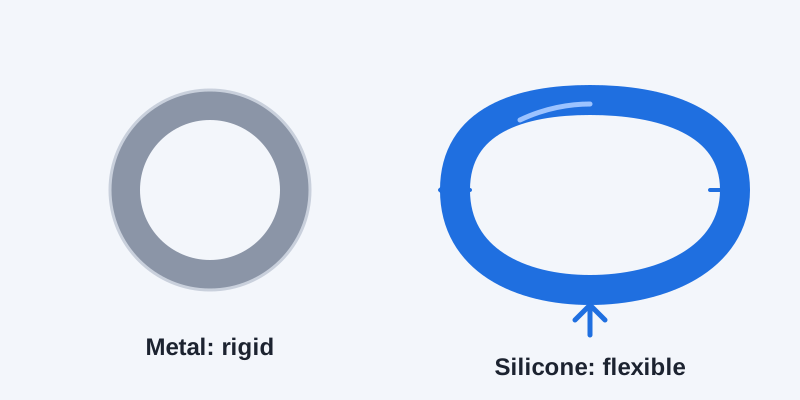
Metal rings, whether gold, silver, platinum, titanium, tungsten or stainless steel, are rigid. They hold a fixed circle. That rigidity is part of why they look polished and why they last for generations. Silicone rings are made from a flexible, rubber-like material. They stretch slightly, bend, and give when they are pressed or squeezed. That one difference, rigid versus flexible, drives almost every other contrast in this guide.
This guide is written for athletes, gym-goers, coaches, parents of young players, and anyone whose hands do real work or play. We compare the two materials on comfort, safety, cost, durability and appearance, and then give plain rules for when each one makes sense. It is not medical advice, and it is not a claim that any ring is safe for any particular sport. Rules differ by league, sport and job, and you should always follow the guidance of your coach, official or employer.
Full disclosure: we sell silicone sports rings at Gameday Global. We think they are a great fit for active people, and we say so below. We also think metal rings are the right answer in plenty of situations, and we say that too. If a metal ring is what you need, wear it with a clear conscience.
Which is more comfortable to wear all day?
Comfort is personal, but a few things are generally true about how the two materials feel on the hand.
Silicone is light. A silicone band weighs very little compared with a solid metal band of the same width, so many people stop noticing it within a day or two. It also has some give. If your finger changes size over the course of a day, which is common, a flexible band can accommodate small changes better than a rigid one. Fingers often look slightly different after exercise, in heat, in cold, or at different times of day, and a ring that cannot flex has no way to adapt to that.
Silicone also tends to feel warm rather than cold. Metal conducts temperature quickly, so a metal ring can feel chilly on a winter morning run and hot after sitting in the sun. Silicone changes temperature more slowly and feels closer to neutral against skin.
Metal has comfort advantages of its own. A well-fitted metal band has a smooth, hard surface that slides over the skin easily, and some people prefer the solid feel. Comfort-fit metal rings, which have a gently rounded inside edge, are designed to be easy to wear for long periods. A metal ring that is the right size for you can be extremely comfortable.
The catch is that a metal ring is only comfortable if the size is right and stays right. Too tight, and it can feel restrictive when your hands swell a little. Too loose, and it spins, slides, or catches on things. Silicone is more forgiving of a size that is close but not perfect, although a good fit still matters. Our guide on how to find your ring size walks through measuring at home, and we recommend measuring at the end of the day when your fingers are at their largest.
Skin feel is another factor. Silicone can trap a little moisture under the band, especially during long, sweaty sessions. Metal does the same, to a lesser degree, and some metals can irritate skin for people with sensitivities. If your skin reacts to a ring, take it off, dry the area and let the skin rest. Simple habits such as drying your hands and the band after washing and rotating which finger or hand you wear it on can help. If irritation continues, check with a healthcare professional; we cannot give medical guidance.
- Silicone: lightweight, flexible, neutral temperature, forgiving of small size changes.
- Metal: solid and smooth, can feel cold or hot, needs a precise size, comfort-fit styles are available.
- Either: measure at the end of the day, keep skin and band clean and dry, and take the ring off if it ever feels wrong.
Which is safer for sports and active work?
This is the question most people really want answered, so we will be careful and specific about what we can and cannot say.
The practical concern with any ring is that it can catch on something. Think of a gym rack, a pull-up bar, a kettlebell handle, a fence, a basketball net, a jersey, another player's hand, or a piece of equipment on a job site. A ring that catches while your hand is moving can pull on the finger. This is a well-known reason that many coaches, trainers, schools, leagues and workplaces ask people to remove jewelry or limit it.
Because silicone is soft and flexible, many people feel more comfortable wearing it than a rigid metal band around equipment. A soft band is less likely to dent, scratch or damage the equipment and the hand holding it, and it does not conduct electricity. These are real, practical differences. They are not guarantees. Silicone is not a safety device, and we do not claim that wearing one prevents an injury or that it will break away in every situation. Any ring, of any material, can catch.
Many sports, schools and leagues have written rules about jewelry. Some prohibit rings outright during play. Some allow certain items if they are covered or taped. Some leave it to the official's discretion. These rules vary and change, and we do not claim that any of our rings are approved for any league, event or competition. Before you wear any ring in a game, ask your coach or read the rulebook. If the answer is no rings during play, then the safest ring is the one in your bag, and that is true for silicone and metal alike.
A sensible approach for athletes looks like this:
- Ask first. Check your league, school or gym rules before wearing any ring during practice or competition.
- Choose a fit that is snug but not tight, with no sliding or spinning.
- Avoid contact situations and apparatus work where a ring could catch, regardless of material.
- Remove your ring when in doubt. A ring is easy to replace; a finger is not.
- Inspect regularly. Stretched, torn or worn silicone, and bent or cracked metal, should be retired.
In short, silicone is popular with active people because it feels less risky and more forgiving than rigid metal, but no ring is risk-free, and the rulebook always outranks our opinion.
How do silicone and metal rings compare on cost?
Cost is where the two materials differ the most, and it is the reason many active people end up with silicone as a daily ring.
Metal rings cover an enormous price range. A basic stainless steel or tungsten band can be inexpensive, while a gold, platinum or diamond ring can cost a great deal. Precious metals are priced by the market, and craftsmanship, stones and brand all add to the total. A metal ring you love is often an investment that is meant to be kept.
Silicone rings sit at the accessible end of the range. Our 3D silicone sports rings retail for $29.99 each at gameday.best, in sizes 4 through 15, and basic plain silicone bands are available elsewhere for less. The important point is not the exact figure but what the lower price allows. You can own more than one, keep a spare in your gym bag, replace a worn one without a second thought, and wear it in places where you would be nervous about losing or damaging a ring that cost real money.
| Factor | Silicone | Metal |
|---|---|---|
| Typical price range | Low to moderate | Low to very high, depending on metal and stones |
| Cost of replacing a lost or damaged ring | Small | Can be significant |
| Resale or heirloom value | Generally none | Often retained, especially precious metals |
| Resizing | Not possible, buy a new size | Often possible, depending on the metal and style |
| Worry level during sports and chores | Low | Higher for valuable pieces |
If you are buying for a team, club or fundraiser, cost scales even more clearly. Retailers and organizations can buy silicone rings in bulk. Our wholesale program starts at $9.00 per ring with a starter case and a free countertop display, with $8.00 per ring on five or more cases. If you are stocking for the holiday rush, the order deadline for Black Friday delivery is November 6, 2026. Details are at gameday.best/wholesale.
Which lasts longer?
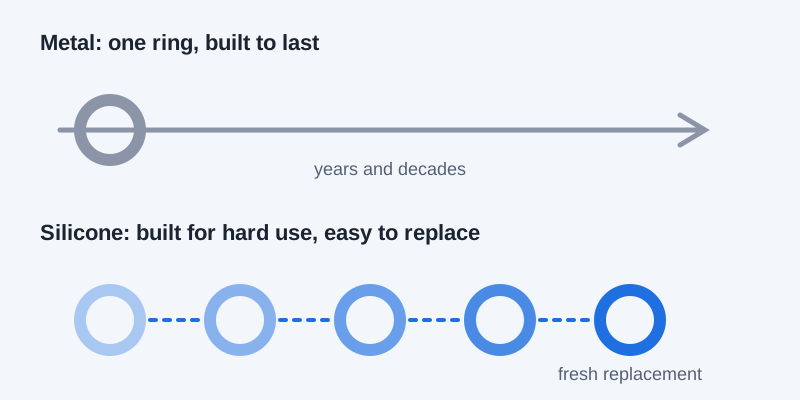
Durability depends on how you measure it. Metal wins on lifespan. Silicone wins on resilience to the knocks of daily life. Both statements are true.
Precious and hard metals can last for decades. Gold, platinum and titanium are used in rings that are passed down in families. They can scratch, dent or lose their shine, and softer metals bend under pressure, but a well-made metal ring is a long-term object. If you want something that marks a milestone and may outlive you, metal is the material.
Silicone is more of a working ring. It shrugs off many of the things that mark up metal. It does not dent, it generally does not show the scratches that metal does, and it does not corrode in sweat, chlorine or salt water the way some metals can. Rinsing it after a swim or workout is usually enough to keep it in good shape. Over time, though, silicone can wear. It can stretch out of shape, pick up lint and oils, discolor, or tear if it is snagged or cut. Heavy use will eventually wear a band out, and a worn band should be replaced.
The care involved is different too. Metal rings may need occasional polishing, professional cleaning, prong checks if they hold stones, and resizing as life changes. Silicone mostly needs a rinse with mild soap and water and a dry. We cover this in detail in our guide on how to care for silicone rings, including what to avoid so that a ring keeps its color and shape.
Think of it this way. A metal ring is built to last a lifetime but to be treated gently. A silicone ring is built to be used hard but to be replaced when it wears out. For an active person, the second model often matches real life better.
Which material fits which sport or activity?
The right ring depends on what your hands are doing. The table below is a general guide only. Rules and risks differ, so use it as a starting point and then check with your coach, trainer or employer.
| Activity | Silicone | Metal | Note |
|---|---|---|---|
| Weightlifting and gym training | Often preferred | Often removed | Bars, racks and handles can catch rings of any kind |
| Running and cycling | Popular | Possible | Fingers can swell slightly; a flexible band adapts |
| Swimming and water sports | Popular | Depends on metal | Rinse after salt water or chlorine |
| Golf | Popular | Common | Many golfers wear a ring all round |
| Team sports with contact | Check rules first | Often not allowed | Follow your league's jewelry policy |
| Hiking, camping, gardening | Popular | Risk of loss | A lost ring is cheaper to replace in silicone |
| Work with tools or machinery | Check workplace rules | Often discouraged | Follow your employer's safety policy |
| Formal events and weddings | Rarely | Typical | Metal suits the occasion |
A few notes on the table. In team sports, the cleanest answer is usually to leave your ring off during play if the rules require it, and put it back on afterward. That is why some people like to wear a silicone ring everywhere else and keep their rings for game day in the bag. In golf, a ring stays on for most players, and a silicone ring is a favorite because it will not get nicked or lost on the course. Our 3D silicone rings are made in football, baseball, softball, basketball, soccer, golf and volleyball designs, so they double as a small statement about the sport you love.
For a closer look at how athletes in particular choose, read our guide to sports rings for athletes. It covers sport-by-sport considerations, gift ideas for players and coaches, and how to think about fit and rules.
Looking for a sport-specific ring? See the football, baseball, softball, basketball, soccer, golf and volleyball designs at gameday.best.
When should you choose silicone, and when should you choose metal?
Here are straightforward rules of thumb. None of them is absolute, and personal preference counts.
Choose silicone when:
- You train, play or work in a way that could catch or damage a ring.
- You want a ring you do not have to worry about losing, scratching or replacing.
- Your fingers change size with temperature, activity or time of day.
- You want a low-cost spare, a gym ring, or a travel ring.
- You need a fun, team-themed ring for yourself, a player, or a gift.
- You are buying in volume for a team, a club, a fundraiser or a store.
Choose metal when:
- The ring represents a lasting commitment or milestone.
- You want a piece that can be passed down or resized over time.
- The occasion is formal.
- You are mostly sedentary during the hours you wear it.
- You prefer the weight and feel of a solid band.
Choose neither, and leave the ring off, when:
- Your sport, school, league or job prohibits rings.
- You are doing apparatus, climbing or contact work where a ring could catch.
- Your hand is swollen, sore or irritated.
- A coach or official asks you to remove it.
Stocking a store, team or fundraiser? Wholesale starts at $9.00 per ring with a free countertop display. Order by November 6, 2026 for Black Friday at gameday.best/wholesale.
Can you wear both?
Yes, and many active people do. A common routine is to keep a metal ring for work, dinner and special occasions, and keep a silicone ring in a gym bag, a car console or on the nightstand for everything else. Swapping is easy, and the silicone ring takes the daily wear so the metal one stays in good shape.
If your metal ring holds sentimental value, this approach has an extra benefit. It stays safe at home, while the silicone ring does the daily work.
If you do keep a silicone ring on hand, make sure it fits. A ring that is too big can slip off and a ring that is too tight is uncomfortable, so measure properly and consider ordering two neighboring sizes if you are between them. Our sizes run from 4 to 15. Check how to find your ring size for a step-by-step method.
Key takeaways
- Silicone is flexible, light and affordable; metal is rigid, durable and often valuable.
- Silicone is popular for training, outdoor activity and any situation where you would worry about a pricey ring.
- No ring is risk-free. Rings of any material can catch, and rules about jewelry vary by league, school and workplace.
- Metal wins on lifespan, resizing and formal occasions; silicone wins on low cost, easy replacement and everyday resilience.
- Measure your size at the end of the day and care for the ring to make it last.
- Owning both is a practical option for many active people.
Frequently asked questions
Are silicone rings better than metal rings for the gym?
Many lifters prefer silicone because it is lightweight, flexible, and inexpensive to replace if it gets worn. Metal rings can scratch, dent or catch on bars and racks. No ring is risk-free, though, so follow your gym's rules, and take the ring off whenever you feel unsure.
Can I wear a silicone ring during sports games?
It depends on your league, school and sport. Many organizations restrict or prohibit jewelry during play, and we do not claim our rings are approved for any league. Ask your coach or check the rulebook first. If rings are not allowed, wear it before and after the game instead.
Do silicone rings last as long as metal rings?
No. Precious and hard metals can last for decades, while silicone is meant to be used hard and replaced when it wears, stretches, discolors or tears. Because silicone costs much less, replacing it is easy, and many active people keep a spare.
Are silicone rings cheaper than metal rings?
Generally, yes. Metal rings range from inexpensive to very costly depending on the metal and stones. Silicone sits at the affordable end. Our 3D sports rings retail for $29.99, and wholesale begins at $9.00 per ring for retailers and teams ordering by the case.
Can silicone rings be resized?
No. Silicone cannot be resized, so you buy the size that fits. Some metal rings can be resized by a jeweler, although certain metals such as tungsten usually cannot. Measure your finger at the end of the day, and consider ordering two neighboring sizes if you fall between them.
How do I clean a silicone ring?
Wash it with mild soap and warm water, rinse well, and let it dry before putting it back on. Rinse it after swimming or heavy sweating. Avoid harsh chemicals and sharp objects. Our guide on caring for silicone rings has more detail.
Can I wear a silicone ring as a wedding band?
Many people do, especially when their jobs or hobbies make a metal band impractical. Some keep a metal ring for formal occasions and a silicone one for daily life. It is a personal choice, and nothing about the material changes what the ring means to you.
What sizes do Gameday Global silicone rings come in?
Our 3D silicone sports rings come in sizes 4 through 15 in football, baseball, softball, basketball, soccer, golf and volleyball designs. Each ring is a 3D design, so it doubles as a small statement about the sport you love. You can browse and order at gameday.best, and retailers can find wholesale details at gameday.best/wholesale.
Ready to pick a ring? Shop at gameday.best or ask us anything at [email protected].
Sources and notes
This guide contains no statistics. It relies on general, widely understood properties of metals and silicone and on product details from Gameday Global. Jewelry rules for sports, schools and workplaces differ and change, so confirm them with the relevant organization.