How to Clean and Care for Silicone Rings
Why does caring for a silicone ring matter?
A silicone ring is one of the easiest pieces of jewelry to own. It is flexible, lightweight, comfortable, and it does not mind a rough day. That is exactly why so many players, coaches, and fans like them. But easy to wear does not mean it should be ignored. A ring that spends hours against your skin collects sweat, natural oils, dust, and whatever else your hands touch, and a little regular care keeps it looking and feeling like new.
Good care also helps the ring last longer. A clean ring keeps its color and its texture, and the raised 3D designs on a sports ring, such as the seams of a baseball or the lines of a basketball, stay crisp and easy to see. A ring that is never washed tends to look dingy and can start to feel sticky or slick.
There is also a simple comfort reason. Most of us feel better wearing something clean, especially something that sits on a finger all day. Rinsing a ring takes less than a minute, and a fuller wash takes only a few more. Nothing here requires special equipment, and none of it costs more than a few drops of soap.
One thing to say up front: this guide offers general care advice. Every maker is a little different, and the label or care card that came with your ring is the final word. If anything below disagrees with the maker's directions, go with the maker. For our own rings, you can always write to [email protected] and ask.
What do you need to clean a silicone ring?
The good news is that you probably already own everything. Here is the short list:
- Lukewarm water. Comfortable on your hands, not hot.
- Mild soap. A plain, unscented hand soap or dish soap works well. Skip anything gritty or heavily perfumed.
- A soft cloth. A clean microfiber or lint-free cloth is ideal for drying and wiping.
- A soft toothbrush (optional). Handy for the grooves and the inside of the band. Use one you do not use on your teeth.
- A small bowl (optional). It keeps the ring from going down the drain while you work.
That is the whole kit. You do not need jewelry cleaner, polish, or a special solution, and general advice is to avoid harsh products unless the maker says they are fine.
How do you clean a silicone ring step by step?
This is the basic routine. It works for a ring that is just a little grimy or one that has been through a long season. Set aside about five minutes.
- Check the label. If your ring came with a care card, read it first. The maker knows the material and any printed or painted details.
- Take the ring off and rinse it. Hold it under lukewarm running water to wash away loose dirt, chalk, sweat, or sand. Rinsing first keeps grit from scratching the surface while you scrub.
- Wash with mild soap. Put a small drop of soap on your fingertips and rub the ring gently, including the inside of the band where sweat and skin oils collect.
- Clean the details. Use a soft toothbrush or soft cloth on the grooves of a 3D design. Light pressure is enough. Never use a wire brush, a knife, or anything sharp.
- Rinse well. Keep rinsing until the water runs clear and the ring no longer feels soapy. Leftover soap is a common cause of a slick or cloudy look.
- Dry completely. Pat it with a clean cloth and let it air dry flat. Do not put it back on while it is still damp, and do not store it wet.
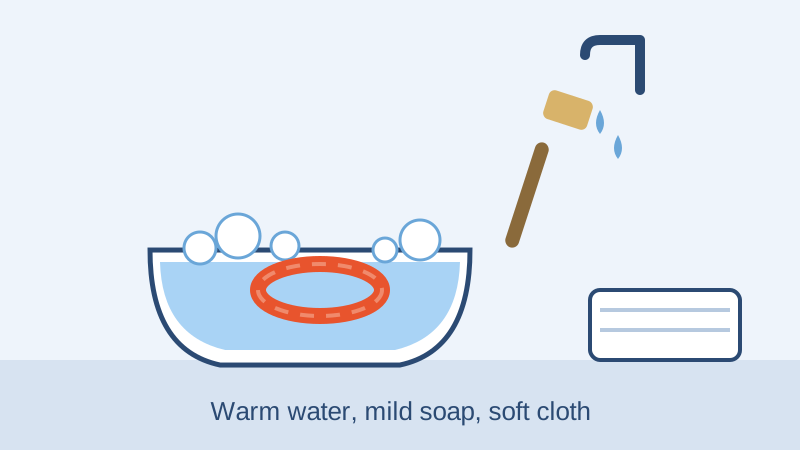
That is it. The same routine works whether you own one ring or a drawer full of them. If you have several, wash them one at a time so nothing gets lost, and dry them on separate spots so the colors do not get mixed up.
A quick tip for the inside of the band
The inside of the ring touches your skin all day, so it picks up the most. Turn the ring over and give the inside a little extra attention with your soapy fingers. Rinse it just as well as the outside. If you notice the inside feels clean but the outside has color transferred from something else, a gentle wipe with a damp soft cloth is usually all it takes.
How often should you clean a silicone ring?
There is no single schedule, because it depends on how and where you wear the ring. A ring worn to every practice picks up more than one that comes out for special occasions. The table below is a sensible starting point, not a rule.
| How you wear it | Quick rinse | Soap-and-water wash |
|---|---|---|
| Every day, all day | Daily or every few days | About once a week |
| Practices, games, and workouts | After each sweaty session | Once a week, or sooner if it gets dirty |
| Pool, lake, or ocean | Right after, with fresh water | When it feels grimy or after a long day outdoors |
| Now and then, for game day | After each wear if sweaty | Before you put it away for the season |
| Kept in a drawer as a spare | Not needed | Wipe off dust before wearing |
Treat the table as a guide and trust your own eyes and hands. If the ring looks dull, feels tacky, or has picked up a smell, wash it. If it still looks and feels clean, you can wait.
How do you handle specific messes like sweat, lotion, chalk, or turf?
Most of the time, the basic routine covers it. A few situations call for a little more thought. Here is how to approach the most common ones with the same gentle method.
Sweat and skin oils
Sweat itself rinses off easily, but if it dries on the ring, it can leave a film. A quick rinse after exercise stops that. If the ring already feels a bit slick, the soap-and-water wash above will take care of it.
Lotion, sunscreen, and hand cream
Creams and sunscreens are the most common cause of a sticky or cloudy ring. They cling to the surface and attract dust. Wash the ring with mild soap, rinse well, and dry it. If you apply lotion often, consider taking the ring off first, putting the product on, and letting your hands dry before sliding it back on.
Chalk, dirt, and turf
Players pick up all kinds of grit. Rinse first with plenty of water so the particles wash away instead of being rubbed in, then wash gently. Skipping the rinse and going straight to scrubbing is how fine surfaces get scuffed.
Chlorine, salt water, and sand
Pool and ocean days call for a fresh-water rinse as soon as you can. Salt, chlorine, and sand do not belong on a ring for hours. Rinse, wash if needed, and dry flat.
Food, grease, and kitchen messes
Grease and sauces rinse off with a drop of dish soap, which is built to cut through them. Wash gently, rinse well, and dry. Avoid harsh kitchen cleaners, scouring powders, or abrasive sponges.
Color transfer from clothing or other items
Sometimes a ring picks up color from dark fabric or from another ring stored against it. A gentle wash usually helps, but a stain that has set may not come out. This is one more reason to store rings separately, as covered below.
| Problem | Gentle first step |
|---|---|
| Dull or cloudy look | Mild soap wash, thorough rinse, full air dry |
| Sticky or tacky feel | Wash to remove lotion or sunscreen film, rinse well |
| Dirt in the 3D grooves | Soft toothbrush with soapy water, light pressure |
| Smell after workouts | Wash inside and out, rinse, and dry completely before storing |
| Chlorine or salt residue | Rinse with fresh water right away, then dry |
| Dust from a drawer | Wipe with a damp soft cloth and dry |
What should you avoid when caring for a silicone ring?
Knowing what not to do is half the job. These are general cautions that apply to many silicone products. When in doubt, check the maker's label.
- Strong solvents and harsh chemicals. Things like acetone, paint thinner, bleach, and strong cleaners can dull, stain, or damage the surface. Mild soap and water is the safer general choice.
- Abrasive scrubbing. Scouring pads, steel wool, gritty cleansers, and stiff brushes can scratch the surface and wear away raised designs.
- Sharp tools. Do not pick at dirt with a pin, knife, or fingernail. A nick can turn into a tear when the ring stretches.
- Prolonged high heat. Hot cars, hot dryers, radiators, and boiling water are not good places for a ring unless the maker says otherwise.
- Long direct sun. Leaving a ring in bright sun for long stretches can fade colors over time.
- Over-stretching. Do not yank a ring wide to get it over a knuckle. Choose the right size instead, which is covered in our guide to how to find your ring size.
- Mixing cleaning products. Never combine household cleaners. Keep it simple with one mild soap.
- Wearing while wet and slippery. A ring on soapy or lotion-covered fingers can slide off. Dry your hands first.
A good rule of thumb is that if you would not use a product on something you wear every day, do not use it on your ring. If a product seems too strong for your skin, it is probably too strong for the ring too.
How should you dry and store a silicone ring?
Drying and storage matter as much as washing. A ring that goes into a bag or box while damp can trap moisture and pick up a smell. A ring that is tossed loose into a drawer can pick up dust and scuffs from other items.
Drying
- Pat the ring with a clean, lint-free cloth.
- Lay it flat on a towel or hang it on a hook and let it air dry at room temperature.
- Do not use a hair dryer on high, a clothes dryer, or a heater to rush it.
- Check the inside of the band for water before putting the ring away.
Storing
- Use a small tray, a divided box, or a pouch so rings do not rub against each other.
- Keep rings away from direct sun and heat, such as a car dashboard or a sunny windowsill.
- Store dark and light colors apart so color does not transfer.
- Keep your game-day ring and your everyday ring in separate spots so you can find the right one fast.
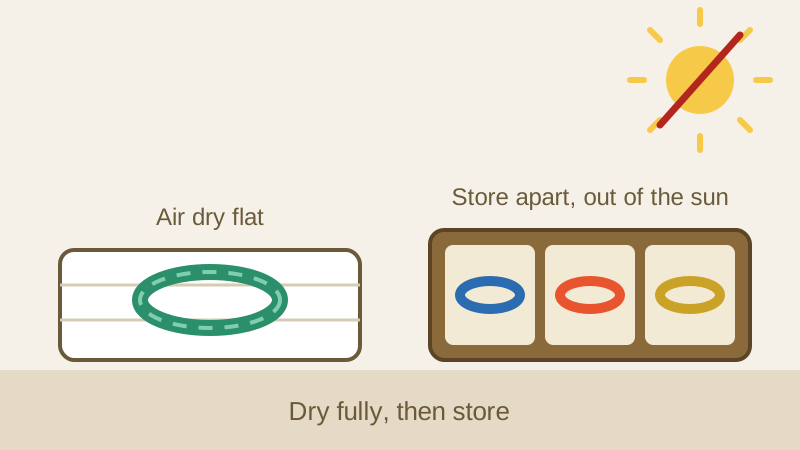
A small divided tray costs very little and solves most storage problems at once. If you travel to tournaments, a small pouch keeps your ring clean in a gear bag.
Do 3D sports rings need special care?
A 3D silicone sports ring has a raised or sculpted design, such as the stitching of a baseball or softball, the panels of a soccer ball, or the dimples of a golf ball. Those details are what make the ring fun, and they are also where dirt tends to settle.
The care is the same, just a bit more patient. Use a soft brush with light pressure to work around the raised parts, rinse the grooves well, and dry them completely. Avoid sharp tools that could nick the edges of the design.
Details are also why a gentle approach matters. Hard scrubbing and harsh chemicals are more likely to dull the finish on a sculpted surface than on a plain band. If your ring has painted or printed accents, treat those areas with extra care, and follow the maker's label.
Our own line includes football, baseball, softball, basketball, soccer, golf, and volleyball designs in sizes 4 to 15. You can see the full range at gameday.best. The same simple wash works across the whole lineup.
When should you take your silicone ring off?
One of the reasons people like silicone is that it is easy to wear. But there are times when taking it off is the smart move. This is general safety sense, not a rule for every situation.
- When using equipment that could catch it. Weights, machinery, tools, and ropes are the usual examples.
- Under your league's or coach's rules. Some sports and some officials have rules about jewelry. Follow them. See our guide to sports rings for athletes for more on wearing rings around sport.
- When applying lotion, sunscreen, or cleaning products. Take it off, apply, let your hands dry, and put it back.
- When doing a messy job. Painting, gardening in wet soil, or deep cleaning are good moments to leave the ring in a safe spot.
- If it feels too tight or uncomfortable. Take it off and rest your hand. If your ring no longer fits well, a different size may serve you better.
None of this is a medical claim. It is common sense. When anything about a ring bothers you, take it off, and if you have a concern about your skin, talk with a qualified professional.
If you are weighing silicone against other materials for these situations, our comparison of silicone vs metal sports rings explains the practical differences.
When is it time to replace a silicone ring?
Even a well-cared-for ring does not last forever. Silicone rings are made to be worn and replaced, and most people keep a spare or two. Here are signs it may be time for a new one:
- A crack, split, or tear anywhere in the band
- A rough or frayed edge that catches on things
- A band that has stretched and no longer fits snugly
- 3D details that have worn flat or rounded off
- Color that has faded unevenly or stained beyond what washing can fix
- A sticky or tacky surface that does not go away after a proper wash and dry
A cracked ring should not be stretched or forced on. Retire it and swap in a new one. Because these rings are inexpensive, replacing one is a small cost compared with the risk of a break at a bad moment.
A lot of fans keep one ring for everyday wear and a fresh one saved for game day, which also spreads out the wear. If you are shopping for a replacement or a gift, gameday.best carries the full range at a retail price of $29.99 per ring.
How should stores and teams care for rings they sell or hand out?
If you run a shop, a concession stand, a booster club table, or a team store, a few habits keep your inventory looking good on the shelf.
- Keep stock dry and out of the sun. Store cases in a cool, dry back room, not in a sunny window.
- Use the display. A countertop display keeps rings sorted by sport and off the floor and counters.
- Wipe off dust. A damp soft cloth restores a ring that has sat for a few weeks.
- Rotate the stock. Sell older stock first, so nothing sits for months.
- Let customers try on carefully. A quick wipe between try-ons keeps display pieces clean.
- Pack with care. Keep rings separate in bags or trays when handing out to a team.
Gameday Global offers wholesale rings from $9.00 per ring in a starter case with a free countertop display, and $8.00 per ring when you order five or more cases. To have them on your shelf for Black Friday, order by November 6, 2026. Details are at gameday.best/wholesale.
For help with sizing a team order, see how to find your ring size.
Key takeaways
- Mild soap, lukewarm water, and a soft cloth are enough to clean most silicone rings.
- Always read the maker's label first. The maker's directions beat any general advice.
- Rinse after sweat, chlorine, salt water, and sand, and wash weekly if you wear it often.
- Avoid harsh solvents, abrasive scrubbing, sharp tools, and long exposure to heat or sun.
- Dry the ring completely and store it in a tray or pouch apart from other rings.
- Use a soft brush for the grooves in 3D designs, with light pressure.
- Replace rings that are cracked, stretched out, or worn flat.
- Take the ring off around equipment or when your league or coach says so.
Frequently asked questions
Can I wash a silicone ring with soap and water?
Yes. Mild soap and lukewarm water is the standard, gentle way to clean most silicone rings. Rub it with your fingers or a soft cloth, rinse well, and let it dry. Always check any care label from the maker first, because the maker's instructions take priority over general advice.
How often should I clean my silicone ring?
If you wear it daily or during workouts, a quick rinse after each sweaty session and a soap-and-water wash every week or so keeps it fresh. A ring worn only now and then needs less. Clean it sooner if it gets visibly dirty, sticky, or covered in lotion, sunscreen, or chalk.
Can I use rubbing alcohol or hand sanitizer on my silicone ring?
Many people avoid strong solvents on rings with printed or painted details, because they can dull or wear the surface. Mild soap and water is the safer general choice. If you want to disinfect, check the maker's label first and test on an inside spot, instead of assuming a stronger product is fine.
Why does my silicone ring look dull or feel sticky?
A dull or tacky look is usually a film of sweat, oils, lotion, sunscreen, or soap residue. A careful wash with mild soap, a thorough rinse, and complete air drying often brings the surface back. If a ring stays sticky or looks damaged after cleaning, it may simply be worn out.
Is it okay to wear a silicone ring in the pool or ocean?
Many people do, and silicone is commonly worn around water. Still, rinse the ring with fresh water afterward to remove chlorine, salt, or sand, then dry it. Because the fit can loosen when hands are wet and cold, take care it does not slip off in open water.
Can I leave my silicone ring in a hot car?
It is best not to. Prolonged heat and direct sunlight are hard on many materials, and a ring left on a dashboard may warp or fade over time. Keep it in a bag, a drawer, or a tray at normal room temperature when you are not wearing it.
How do I know when to replace a silicone ring?
Replace it when it is cracked, torn, stretched out so it no longer fits snugly, or when the 3D details have worn away. Rings are low cost and designed to be worn hard, so keeping a spare for game day is common practice. Retire any ring that has a split or a rough edge.
Should I take my silicone ring off during workouts or sports?
That depends on the activity and the rules of your league, coach, or gym. Silicone rings are popular with athletes partly because they are comfortable and can be removed easily, but if a ring could catch on equipment or gear, taking it off is the careful choice. Follow your coach's and league's rules.